Entradas populares

Mostrando entradas con la etiqueta communication. Mostrar todas las entradas

jueves, 24 de marzo de 2011

Chinese bad romance.


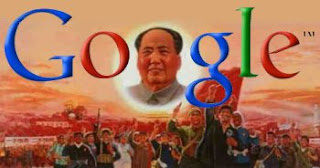
Freedom of speech and Internet are supposed to be the perfect couple since plurality and thousand pages of information about any topic maintain alive their love’s flame. As a normal marriage, they experience some rows like Wikileaks or the Sinde Law, but they always get reconciled saying “we are democracy’s most powerful expression. It doesn´t matter the existence of annoying people like hackers or Anonymous because they are cybercriminals” .Satisfied with the excuse, they sleep together again as if nothing had happened. Every country and relationship has secrets, even the most democratic one. We don’t have to wash the dirty linen in public, but when it comes to countries like China, we are talking about the laundry. This fantastic couple splits up when Governments strick their (big) nose in their business. This meddler lover makes them to sign up the divorce with one word:censorship. Chinese Government has drawn its authoritarian modern expression under the excuse of protecting morals, national security and ethics. Their Facebook is called  renren and Google exists, but censoring pornographic considered content and political events like the Tiannmen killing or number 64, being substituted by their official search engine, Baidu. 

Mainstream population does agree with this because they have been educated to blindly trust their Government. If they initiate a campaign against Google describing it as pervert and pornographic enemy, they will believe it. A Chinese teacher commented me one day that they could access to international servers by getting a foreign IP direction, but there are nonconformists who protest against this situation. Last February 20th we could watch in Shangai and Hong Kong’s streets lots of Chinese students who were
organized by a mysterious American webpage called Boxum  to Spread up the Jasmine´s
Revolution. It was not an important group of people and they were dispersed without any complication.   

Apart from this,China enjoys a protest platform run in foreign countries called China Digital Times,  an online newspaper where is possible to read about how the Internet problem works in the voice of European and American people. Forgetting what happened on February, there is not a solid activism because of the “informatization” into all spheres of life.Why? It´s logical: cyberactivism needs social networks, and if they are controlled by the Government…where is the action? On the other hand, the Jasmine´s Revolution has fewer possibilities to success in China than in Muslim countries for reasons like these (among others): its society is not as polarized as the Muslim one, where there are plenty of poverty stricken areas. If you can´t feed your family, you´ll be angry with the Government. China will beat the USA by 2030…   such a powerful country must be really economically developed, isn´t it?  Second, Muslim webs are not as inhibited as Chinese ones. They enjoy Facebook and Twitter, so their desperation for democracy was a bomb that would explode sooner or later. Third-as a curiosity- This kind of revolution is usually made by young people, and Chinese students do not have enough time to enjoy any kind of social networks because of the amount of work they are obliged to do…Even on Weekends they are made to go to school!

This “democratic” relationship we’ve mentioned before does not have any future in countries like China… yet. Cyber activism can turn into a powerful tool in the Great Asiatic…Why not? Democratic or not, it is time to assume that 100% Governmental transparency is a fairy tale, if not What’s the point of politics? Cyberactivists, you have lots of homework to do…


lunes, 21 de marzo de 2011

No one can´t read my yellow face.


Wherever you are from, you know what irony, happiness, sadness or anger is. Words change according to a country, but feelings keep being the same. They are universal because we are  human beings (except the majority of politicians and the fauna of yellow press). As Aristotle´s said, a person is a zoon politikon, we want someone to know our feelings and emotions. I’m not being philosophic; I want to translate this into Internet´s interaction and participation terms. When we write a comment, it is common to be interested in give expression to an emotion in order to avoid misunderstandings or intensify what you said. What would you do in this case? You’ll use an emoticon.

This smiley face was created by Scott E. Fahlman in 1982. By this year, there were problems to know if someone that posted a message on the Carnegie Mellon online bulletin wanted to be serious, ironic or funny. That was the birth of the J and L idea, then came the explosion of this phenomena in chats, forums, social networks…anything implying some kind of feedback! Some of these pictures have developed beyond its yellow faces and have specialized in specific social networks, like the image of the “Like Button” in Facebook, Tuenti´s icon or the (now forgotten) place where they became famous: Messenger. An emoticon worths more than a thousand words and helps the user to be interpreted in the best way. Let´s have a look to this conversation:


If Yaiza had not written an XD, Jo would have been offended, because she didn’t know that it was in a good sense. The XD emoticon is probably the most versatile one, because it means happiness, auto depreciation, LOL (Laughing Out Loud), to blaspheme and is a good way to avoid reading never-ending messages and stay like you’ve done it. A written “XD” in the right moment can save your life. I wish I could put a face like this.

Some time ago I read an article in El PAÍS about how emoticons are utilized in marketing campaigns. Commercial firms like Dan'Up, Pokémon, Veas, Tampax, Coca-Cola, Sony Ericsson, Emi Record, Nestlé, Johnson & Johnson, Durex, BMW, Xbox, Fanta, Sony PlayStation, Peugeot and Danone use them in their products. As you can observe, these goods are destined to a young market segment because of their constant use. 

The Spanish Government also resorted to them in order to prevent the spread of AIDS.
Cartel de la campaña


We still prefer express ourselves in an analogical way than in a digital one, but the point of the Digital era is not only to be closer to reality, but expand its possibilities. Despite the fact that emoticons keep the same (or similar) in a global sphere, a challenge like unify all languages in an Internet one is an excess. I know that its “global” essence makes the necessity of creating something able to beat this “Babel Tower” but we must remember that each language means its own culture and way of life. It involves a national identity and the world is not ready (yesterday, today and maybe never) to become a political Pangea. Even Internet can´t change this.